
Service
Garage Door Repair for Bossier City's 1980s and '90s Housing Stock
Torsion springs and openers from Bossier City's 1980s-90s housing boom are hitting 30+ years old. We fix the specific failures that stock throws at you.
- Licensed & Insured
- Same-Area Service Calls
- Upfront Pricing
Booking a Visit
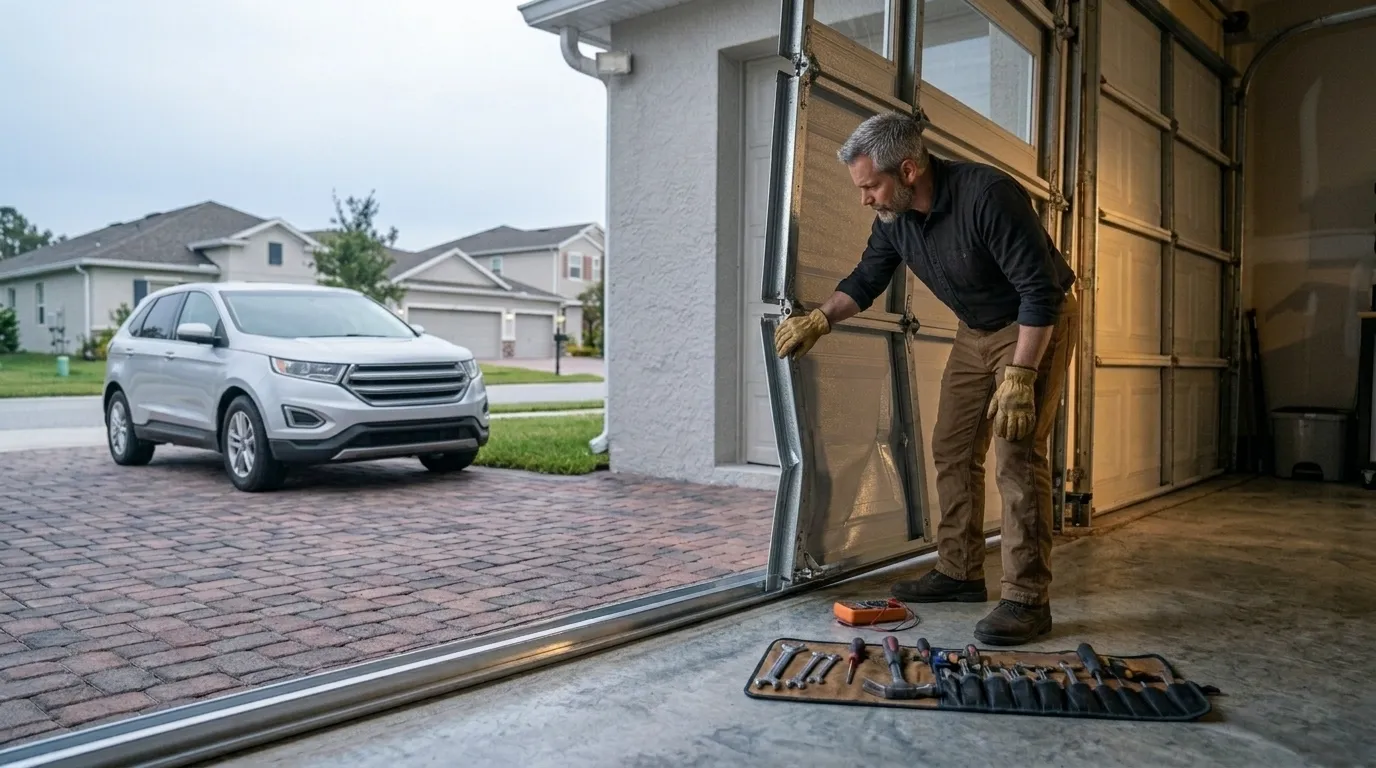
Most calls we get start the same way: a door that won't open, or one that opens halfway and stops. Tell us what the door is doing right now - grinding, sagging on one side, refusing to budge - and we can usually tell you over the phone whether it's a spring, a cable, or the opener itself before a truck ever leaves.
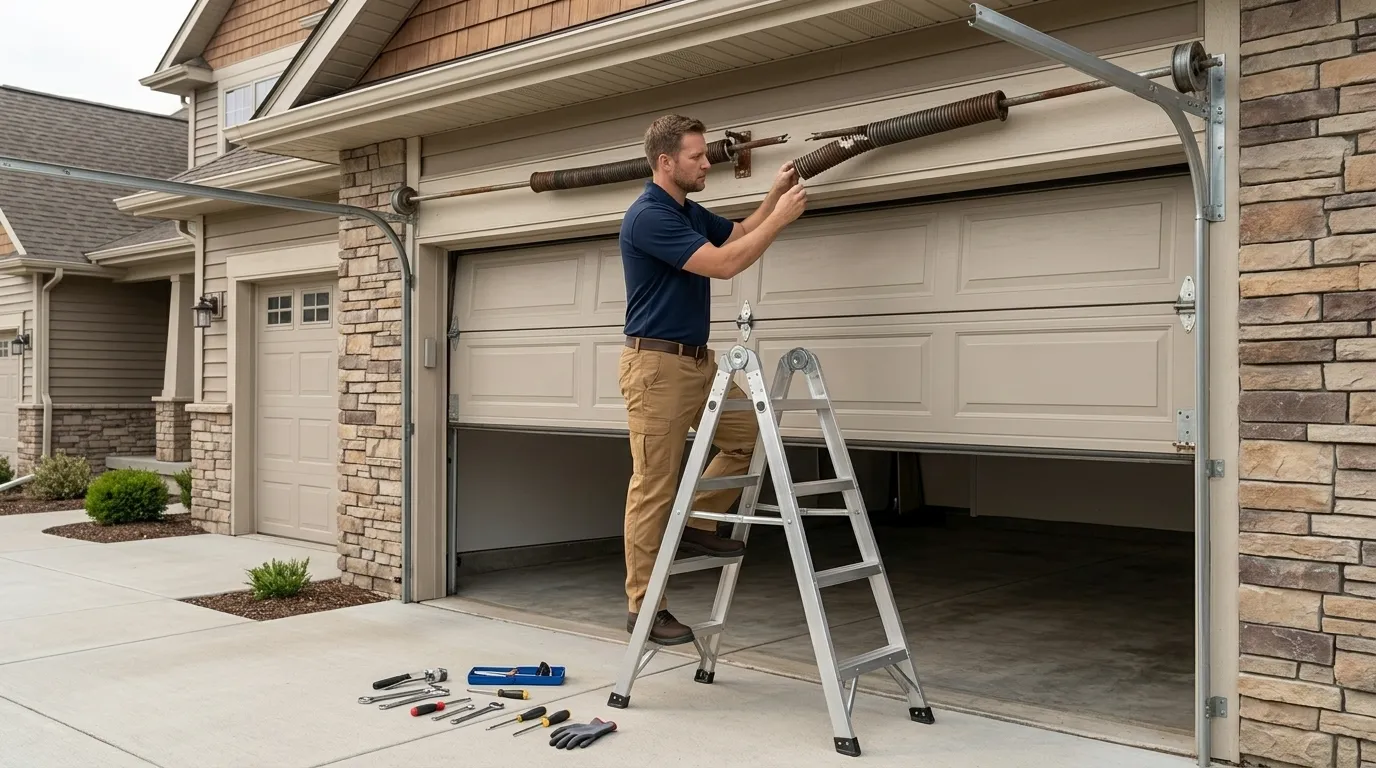
That matters because parts availability varies. A torsion spring sized for a door installed in the early '90s isn't always the same part a big-box store stocks today, so knowing the fault ahead of time lets us bring the right spring instead of guessing.
We cover the areas around Bossier City itself along with Red Chute, Eastwood, Haughton, Lakeview, Benton, Blanchard, Greenwood, and Stonewall. If you're closer in, near Red Chute or Eastwood, we can often get there same day.
Farther out toward Greenwood or Stonewall, we still come, but plan for a wider arrival window. You can see current scheduling and reach us through our website.
Why It Happens Here
A big share of the houses across this service area went up between 1981 and 1996, with a median build year around 1993. That's not a random detail - it means a large number of garage doors, springs, and openers on this side of town are now thirty to forty years past installation, all wearing out on roughly the same clock. When one homeowner on a 1980s-built street calls about a snapped torsion spring, the house two doors down built the same year is usually not far behind.
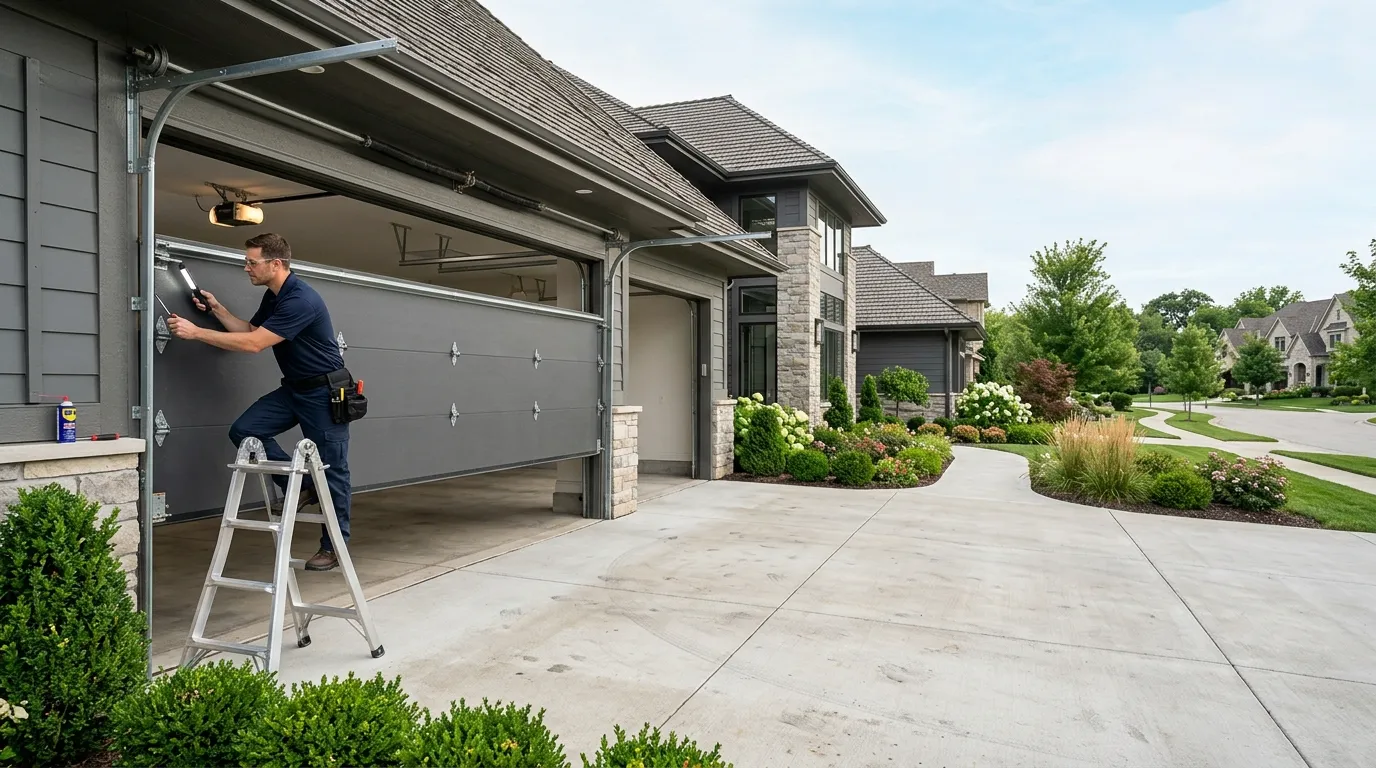
The climate here runs a moderate heat band, not the extreme swings you get farther north or in true desert heat. That works against dramatic cold-snap spring failures but works for slower, cumulative damage: grease drying out in torsion springs, nylon rollers going brittle and cracking after years of summer heat cycling, and steel tracks that have quietly gone out of alignment as houses settle. It's wear, not shock, and it shows up as a door that's gotten noisier and slower over a season or two before it finally fails outright.
Can You Do This Yourself
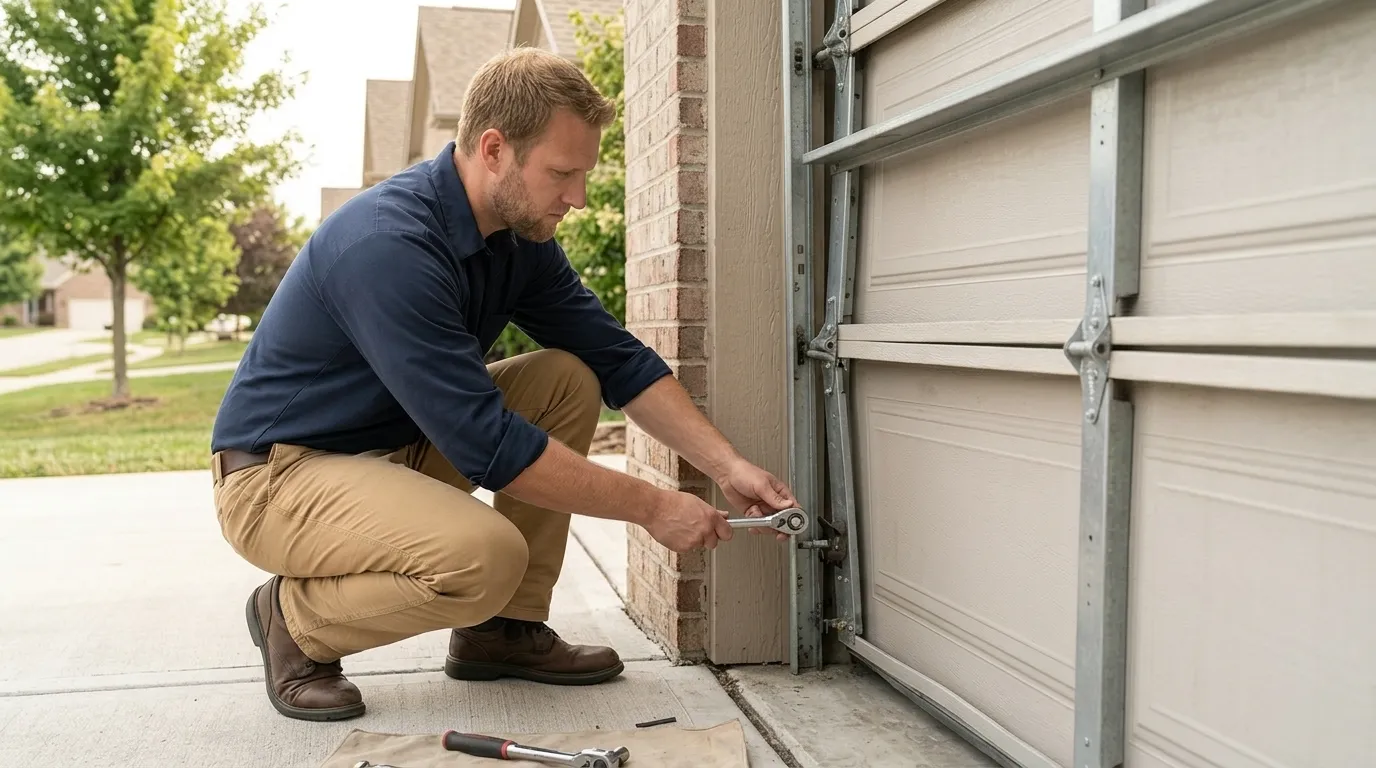
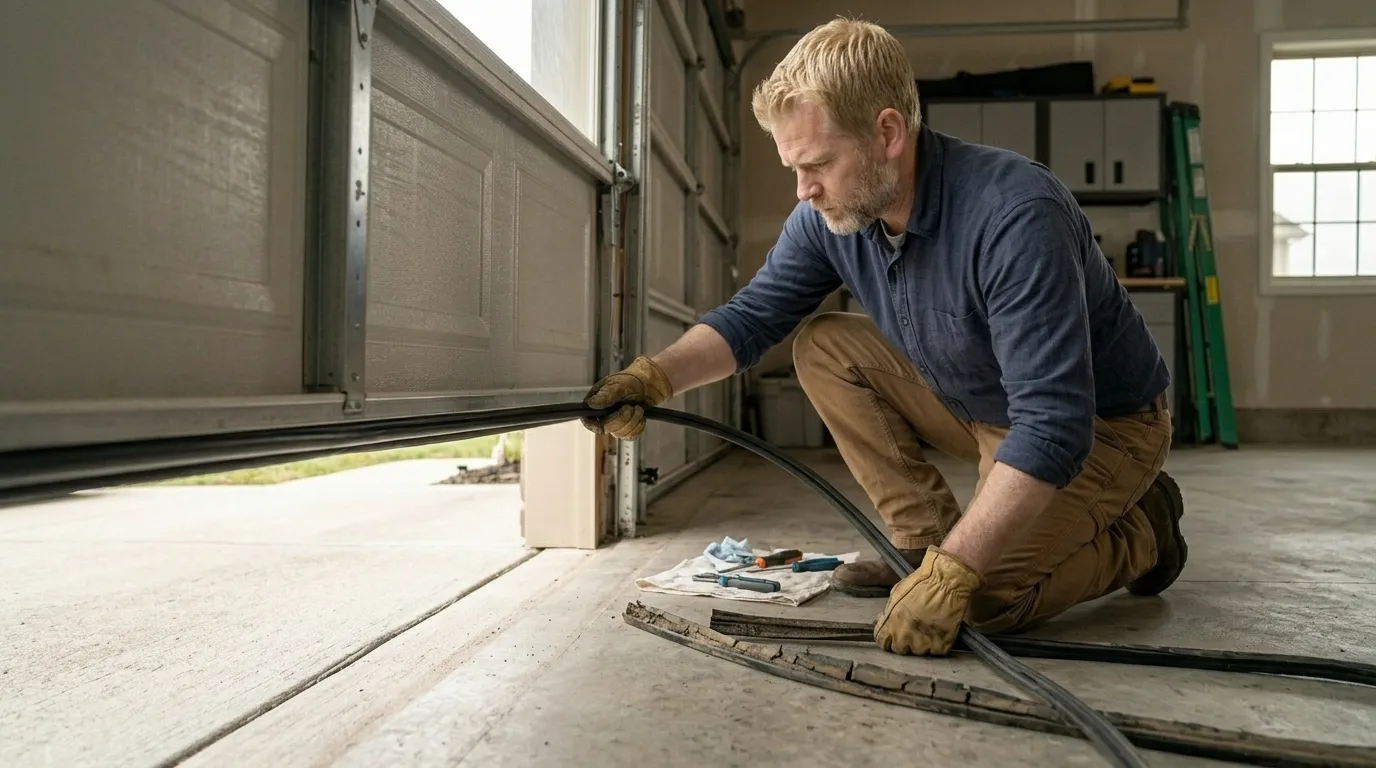
Some of this is fair game for a homeowner with a ladder and a Saturday. Tightening loose track bolts, cleaning and lubricating rollers, replacing worn weatherstripping - none of that needs a technician. If your door is dragging or squeaking but still opens and closes under its own power, that's a maintenance job, not a repair call.
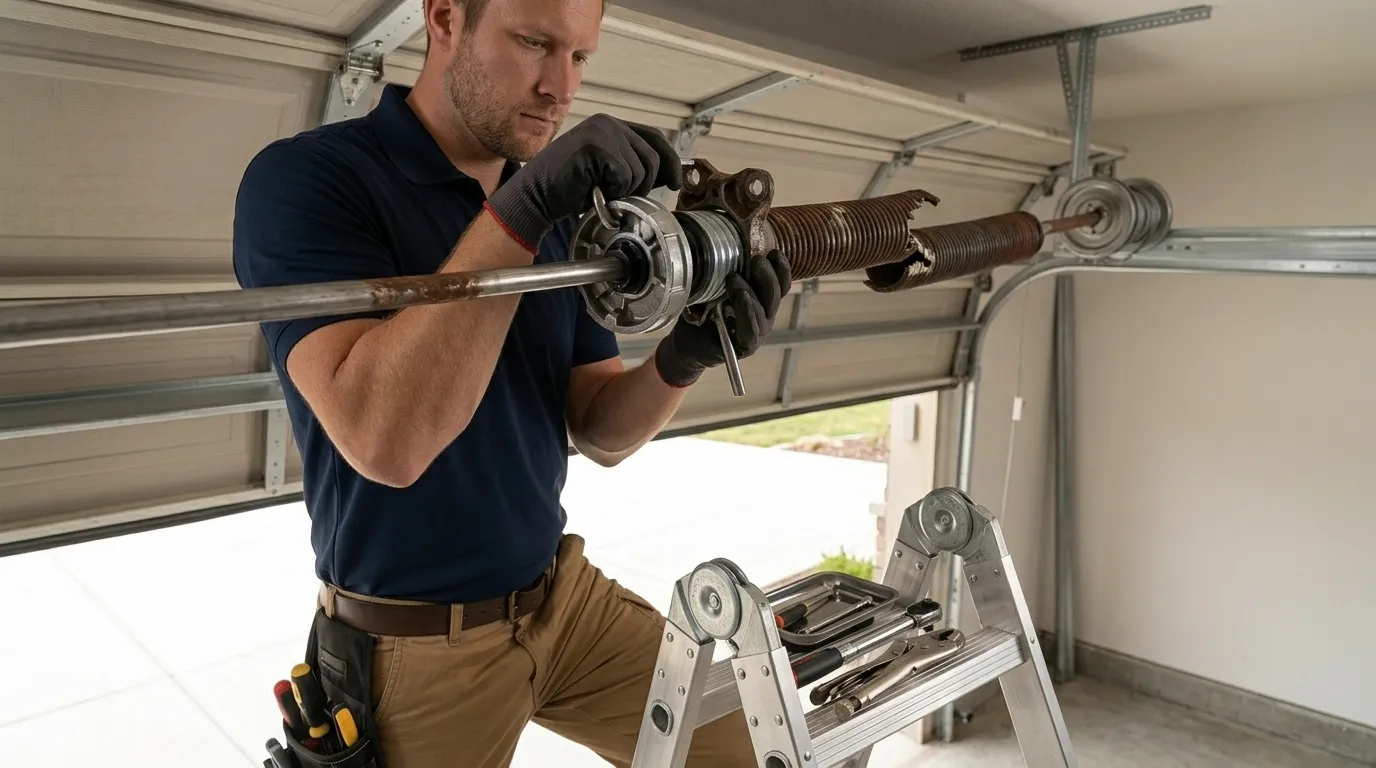
A broken torsion spring is a different category. These doors, many original to houses built in the 1981-1996 window, use springs under enough tension to cause a serious injury if the winding bars slip or the spring lets go while you're working on it. We won't talk anyone through doing that one at home.
Same goes for cable replacement on a door that's still under spring tension - the cable failing is often a symptom, not the root problem, and swapping it without checking the spring underneath just sets up the next failure. If in doubt, treat anything involving the spring or the cables as a call, not a project.
The Symptom
The pattern we see most in this service area is a door that's gotten progressively louder and slower, then one day won't lift past a foot or two off the ground. That's almost always a spring that's lost tension or snapped outright, and it tracks closely with the age of the housing stock here - doors installed when a house was built in the late '80s or early '90s are exactly the ones hitting end of life now.
A second pattern, tied more to the heat than to age, is rollers that have gone from a smooth roll to a dry scrape, sometimes with visible cracks in the nylon. That one usually announces itself with noise weeks before it fails completely, which is the window where a roller swap is cheap and a full spring failure isn't. If your door is making that sound, it's worth a call before it becomes the other kind of call.
Why Bossier City Calls Us
What Happens When You Call
Call or Request a Quote
Tell us what the door is doing and roughly how old the house is - that alone points us toward the likely part before a truck leaves.
On-Site Diagnosis
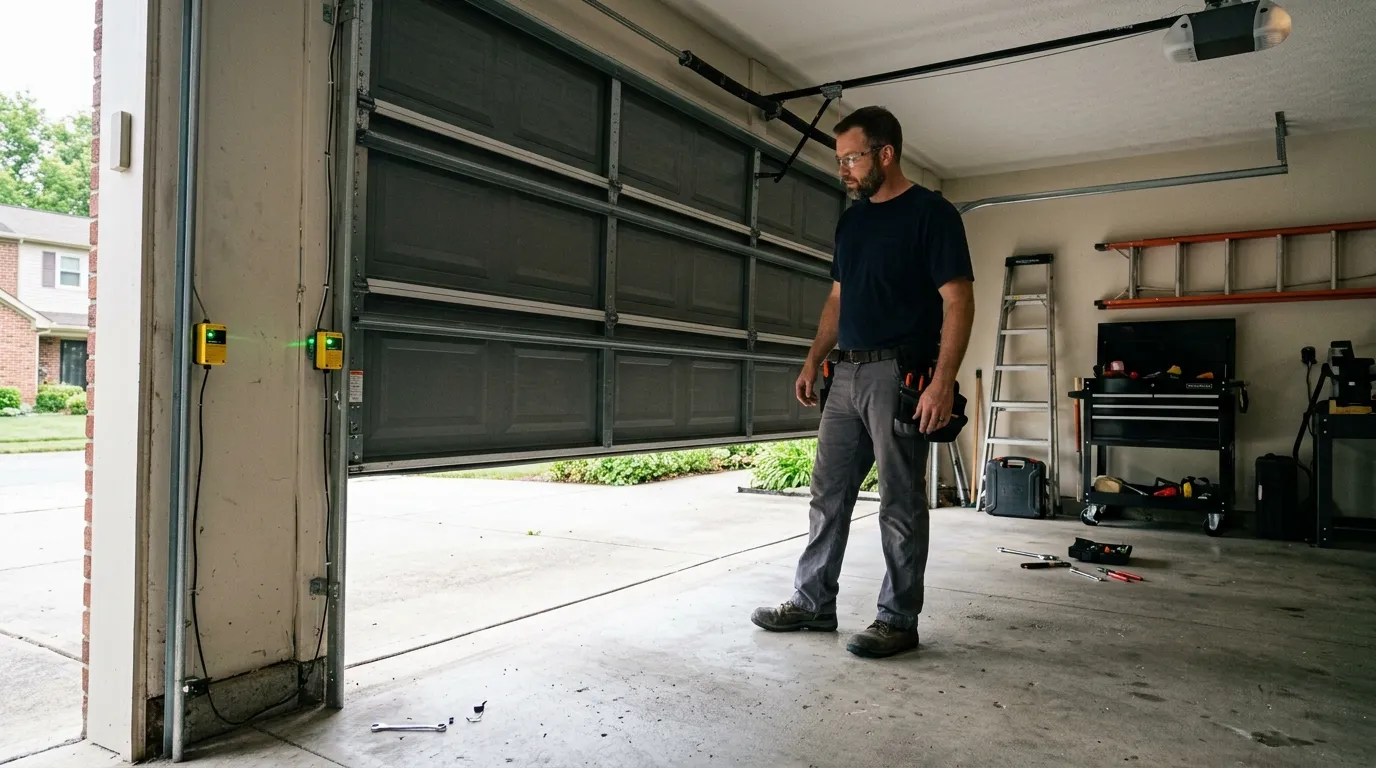
A tech checks the spring, cables, tracks, and opener in person and tells you plainly what is actually wrong.
Straight Price, No Surprises
You get a number before any work starts. It covers parts and labor, nothing added after the fact.
Fixed the Same Visit
Most repairs are done in one trip. If a part needs sourcing, we tell you that upfront instead of guessing.
Talk to a Technician Before You Book
Describe what the door is doing and get a straight answer on what it likely needs.
Jobs Like Yours
Recent work from this service line.
Other Ways We Can Help
Frequently Asked Questions
How do I know if it's the spring or the opener?
If the door won't budge even when you disconnect the opener and try lifting it by hand, that points to the spring - it's not providing the counterbalance it should. If the door lifts fine by hand but the opener won't move it, the problem is electrical or in the opener's drive mechanism, not the spring.
Why does my neighbor's door from the same era keep failing too?
A lot of the houses in this service area went up in the same building window, roughly 1981 to 1996. Springs, openers, and rollers installed at that time are all reaching the end of their working life around the same years, which is why failures tend to cluster by street and by build era rather than happening at random.
Is it worth replacing the door instead of repairing it?
Depends what's failing. A spring or roller repair on an otherwise sound door is usually worth doing. If the panels are dented, the track is bent from age, and the opener is also failing, repairing piece by piece can cost more over a year than one replacement. We'll tell you honestly which side of that line your door is on.
Need Garage Door Repair for Bossier City's 1980s and '90s Housing Stock?
Call now for straight answers on cost and timing.